HAVE
A NICE
EASTER!!!
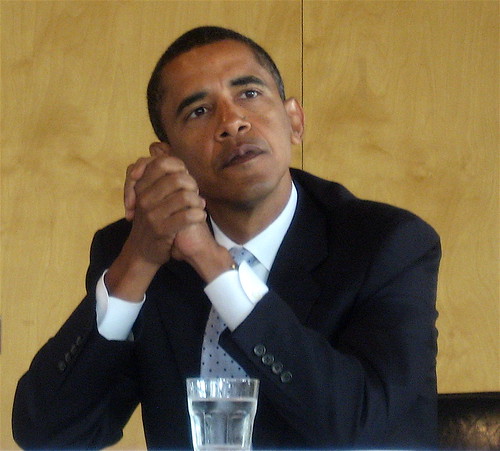
It was quite hard to accomplish my task this week because I spent a lot of time reading online newspapers and searching for a common piece of news each newspaper dealt with. Finally, I chose to analyse the articles concerning with Barack Obama’s victory in the primaries in
The online newspapers are written in three different languages:
In my opinion, it is important to focus, first of all, on the titles of the three articles. While the title of the article in The New York Times “Obama wins in Mississippi” is a mere evidence of the facts of the previous day, the title of the Spanish article “Obama vence en Misisipi y aumenta su ventaja sobre Clinton” gives evidence to the fact but it also points to Obama’s regaining his footing over Sen. Hillary Clinton. The Italian article is characterized by a title “Obama vince anche in Mississippi” and a subtitle “La sfida si sposta in
All the three articles begin with the results of the election giving the exact data and the percentage of the voters and delegates gained by the two candidates. The articles in The New York Times and in El País point out the fact that Obama’s victory was quite expected in a state where the 36% of the population is black and where the largest proportion of the population is made of Afro-Americans. As a matter of fact, Obama’s victory was built on a wave of support among blacks and pools said that the 90% of black voters supported Barack Obama. Nevertheless, beyond giving these kinds of information, the two online newspapers don’t go deeply into the race issue underlying the Primaries election in Mississipi. The race issue is dealt with in detail in the article from
At a certain point, all the three articles start talking about the final stage of the Democratic nomination fight: the
In conclusion, the message and the amount of information given by the three articles are more or less the same and all give a detailed description of the events. Obviously, there are also some differences but I don’t think they refer mainly to the kind of information that is given but to the order and way in which information is conveyed. The way in which information is conveyed is highly indicative of the aim of the author who is the only entitled with the selection of information deciding which information is relevant and which one can be forgotten.
Last weekend I spent some time reflecting on the next political elections in
In my opinion, even though
Now, let's compare these sentences with some taken from Walter Veltroni's speech in Spello, the starting point of his tour and political campaign covering all the regions of
As you can see, the two candidates point to the need for changing the current situation of the countries and, especially, of their politics. There's an idea of transformation, of a new course or a new direction that has to be taken in order to improve the situation and, as Barack Obama said in one of his speeches, "heal this nation and restore our moral standing in the world". Obviously, going deeply into the two candidates political programmes, the main concerns are quite different because it depends on the crucial problems affecting the two countries nowadays. As far as America is concerned, the main problems now is the war in Iraq (linked with the issues of safety and security), the need for universal health care and the opportunity for any family to afford sending their children to college and provide them a higher education. Listening to some speeches, I'm quite confident to say that Obama's ace in the hole is his opposition to the war in
Here is an interesting video on intercultural media competence. I came across it in Youtube and I thought it was worthwhile to upload it in my blog.
It is an interview with Prof. Dr. Oliver Hahn from the
If you’re interested in this issue, have a look at the video!
What do you think about it?
Talking about culture is not an easy thing. I think that culture is the heritage of every single person being a combination of a lot of different elements: learned, achieved, constructed, inherited, internalized and shared. The concept of culture is a complex one because it is like a case where a lot of different things mix up together. Moreover, the concept of culture is not a monolithic one: culture is quite dynamic because anybody’s culture is constantly reshaped and enriched.
Tomorrow in class we’ll discuss more in detail about these topics. I wonder what my classmates will say about multiculturalism because, up to now, my word is that nowadays, unfortulately, multiculturalism and the peaceful coexistence between different cultures are just a wonderful utopia. But, as we know, some dreams can turn into reality in the future…

Hi everybody!
It’s time to start working again…
Here we go! Ready for the a new semester of lessons, mettings, challenges and discoveries…
Soon, I’ll write you what it’s going on…
Elena

Hi guys!
This is the map of my PLE (Personal Language Environments). If you want to see the image bigger, just double click on it or you can go here or here and have a look at it in its original size.
I really liked this e-tivity because I had the chance to reflect on my language learning in detail and on the tools I use to improve my learning. I think that this is very important now because in the last two months we discovered a lot of new tools (blogs, podcasts, YouTube, Social Bookmarking) that can help us in our language learning as they can play an important role in our daily learning and improvement of our level of English. Another reason why I appreciated this e-tivity was because I had never created an online mind map until yesterday. This was the first opportunity I had to create an online mind map and I really enjoyed it. I had a lot of fun too! MindMeister is a free online mind mapping tool where you can create your mind maps, collect them, share them with your friends or simply export them in your PC as I did. MindMeister is very user-friendly, it's handy in its use and, believe me, if I say so, it means that it is very very easy.
While thinking about my personal English learning environments, I was amazed by the great amount of different tools that came to my mind: there is the formal learning at university but there is also your personal timetable of learning, there are print sources and online sources. Moreover, we can learn English doing other kinds of activities as well, for example working, listening to the music, watching a video or a movie in the original language. I mean, the range of tools is quite endless and our task as ESL students is the one of taking advantage of all these different opportunities in order to develope our personal language learning bringing materials from different kinds of sources. I must say that the English Course we are attending with Sarah greatly helps us to achieve this goal. I decided to divide my PLE map into five sections: each section represents one kind of environment for my English learning. The first one is called "Learning at University" and it includes everything concerned with my formal learning of English: the English Course, the courses of Literature, etc. Another section deals with my "Learning at Work" because English is essential also for my job and my job as well gives me the opportunity to keep up with my English and improve it. Another section concerns with my personal "Learning in the leisure time", that is to say how I try to improve my English also while relaxing and enjoying myself: listening to the music, watching a movie or surfing the Net can be both pleasant activities and strategies to learn English. The forth section is the one of relationships "Learning with my friends" because the best way to learn English is the one to talk in English with somebody, for example with a foreign friend that you met when you were abroad. Finally, last but not least, the section dealing with "Travelling" and the use of the English language to communicate with other people abroad.
I'm curious to have a look at your mind maps on PLE to see which are the similarities and differences with mine.
Let me know what you think about it,
Elena